Early years
Green was born in Mobile, Alabama, on August 8, 1926. His mother taught him piano, and he took up the trombone at about twelve, following his two older brothers, who both played it. After his father died when Urbie was fifteen he went on the road with dance bands, and by 1947 he was playing with Gene Krupa.
Woody Herman and New York
Around 1950 he joined Woody Herman’s Thundering Herd, where his brother Jack also played, and the band made his name nationally. He moved to New York in 1953, was voted New Star trombonist in the DownBeat International Critics Poll the following year, and became one of the busiest players in the city’s studios. He toured with Benny Goodman in the 1950s and 1960s and, after Tommy Dorsey’s death in 1956, led the Dorsey orchestra.
The sound
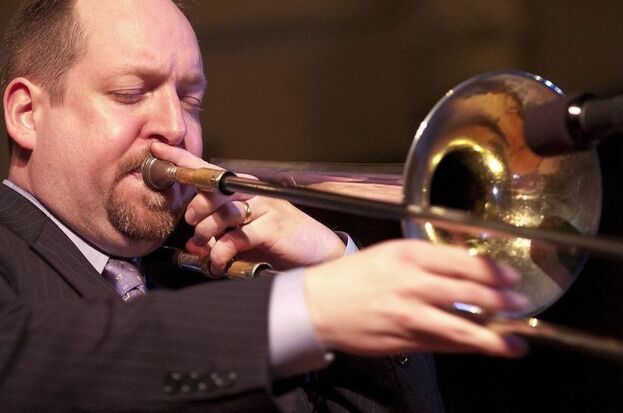
What set Green apart was the voice of the instrument in his hands. Where many jazz trombonists favored a brassy, aggressive attack, he played softly and legato, with a warm, almost vocal tone and a long, flowing melodic line. It made him a favorite of singers and arrangers as well as jazz listeners, and he recorded with Count Basie, Ella Fitzgerald, Tony Bennett, Antonio Carlos Jobim and Frank Sinatra among many others. Twenty-One Trombones (1967), which surrounded him with a choir of the best trombonists in New York, remains the record most associated with him.
Later years
Green kept performing for the rest of his long life, appearing each September at the Celebration of the Arts festival in Delaware Water Gap, Pennsylvania. He was inducted into the Alabama Jazz Hall of Fame in 1995 and died in Hellertown, Pennsylvania, on December 31, 2018, at the age of 92.