Early years
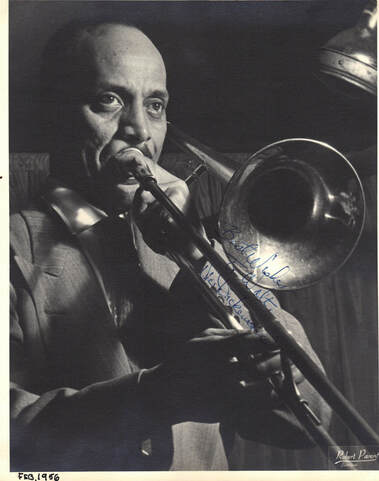
Wells was born in Centerville, Tennessee, on June 10, 1907 (some sources give 1909). The bandleader Lloyd Scott persuaded him to join his band, with which Wells first recorded in 1927, and in the 1930s he played in Fletcher Henderson’s orchestra, taking J.C. Higginbotham’s chair, and toured and recorded with Teddy Hill.
Paris and Basie
In 1937 the French critic Hugues Panassié brought Wells together in Paris with Django Reinhardt and the trumpeter Bill Coleman for two sessions under Wells’s own name. The following year, after Herschel Evans and Lester Young had heard him with Hill, Count Basie invited him into his orchestra. Wells stayed eleven years, from 1938 to 1945 and again from 1947 to 1950, and was one of the band’s principal soloists in its greatest period.
The voice of the horn
Wells’s playing was full of wit and character: a tone that seemed to speak, flexible slide work and inflection, and above all a “terminal vibrato” at the ends of his phrases that became his signature; he also used a homemade “pepper pot” mute. After Basie he toured Europe with Buck Clayton, joined Ray Charles briefly in 1961, played with B.B. King at the Apollo and worked often with Earle Warren’s Countsmen. In later years he survived a brutal mugging that affected his memory and returned to playing. His memoir, The Night People, written with Stanley Dance, is one of the classic first-hand accounts of the jazz life. He died in New York on November 12, 1985.